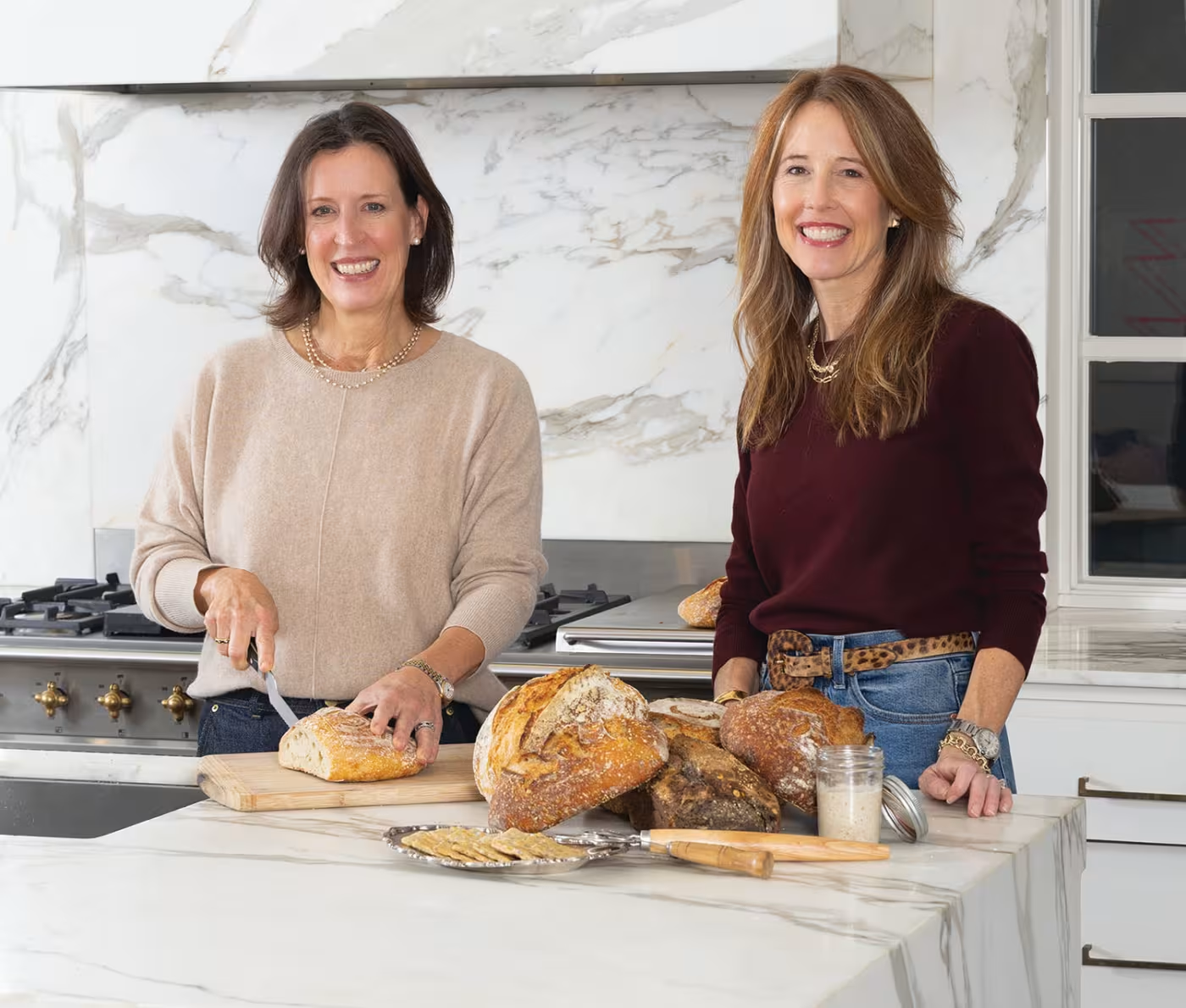
Amy Anton and Sarah Sampson have been sharing recipes for 30 years. The two met through friends and became close as young moms. “Amy and Phillip [Sarah’s husband] went to St. John’s and then Washington & Lee together. Then when our boys were little, we spent a ton of time together at the zoo, at the museums. We were joined at the hip,” says Sarah, a mom of three who only half-jokingly says she’s open for part-time work now that her youngest child, Anna, is a freshman at Washington & Lee University (her son Charles is 25, and Will is 23).
“We were boy moms together,” Amy says. Amy is Anna’s godmother.
“We have always enjoyed cooking together, and she’s always inspired me to cook and learn more in the kitchen,” Sarah says. “We talk about recipes and we do Cook’s Illustrated together. Amy wanted us to do a business together. We were going to be the Kitchen Witches. But I had imposter complex and could never do it.”
Amy did it, opening a cooking school, Kitchen Underground. “I’m doing a couple of [cooking] classes by special request now, but Covid pretty much shut me down,” Amy says. With her three boys out of the house (Ashton is 25, and twins Pete and Elliot will be 23 this month), Amy is working full-time, having taken over her retired father’s position as principal of The Way Companies, a commercial and industrial HVAC company that her grandfather started in 1918.
“Sarah is a fantastic cook and she and I intuited,” Amy says. “We were always cooking for the boys, always sharing recipes back and forth. It’s fun to have someone who has the same taste in food and likes to experiment and will try new recipes with you.”
Sarah says Amy is the expert. “I’m just winging it,” Sarah says. “She really knows what she’s doing.”
Amy says learning to bake sourdough was a natural progression from teaching cooking classes.
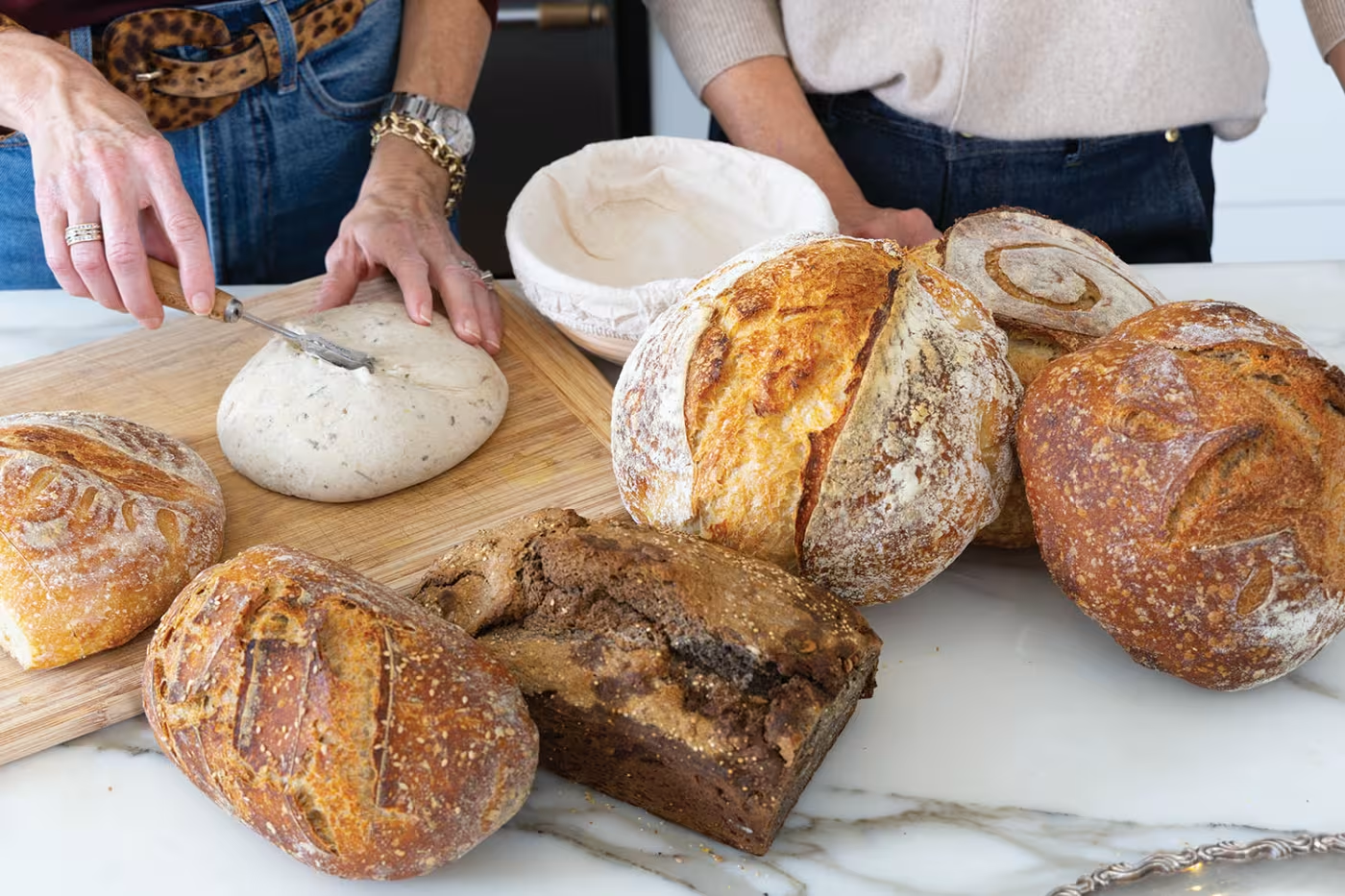
SOURDOUGH CRAZE Baking sourdough bread became a passion for many during the pandemic, when people had the time to put toward new, time-intensive hobbies. (Photo: lawellphoto.com)
“Before the big sourdough craze started, there was some press here and there,” Amy says. “It sounded like fun, so I said I’m in. I made a starter and went from there.” The sourdough starter is a mix of flour and water that ferments and bubbles and acts as a leavening for the bread, in place of yeast. Starters need to be “fed” water and flour regularly, and are characteristically finicky. Amy says her starter is now about 10 years old. “I share my starter all the time,” Amy laughs. “I’ll put it on my doorstep for friends. A lot of people in the city have my starter.”
Just after Amy made her starter, she and another friend attended a one-day sourdough-baking class at Barton Springs Mill in Dripping Springs. “They mill their own flour there and have heritage flours. I became dedicated to making the bread.”
A few years later, when the pandemic hit, Sarah said she suddenly had free time and was ready to give her friend’s new passion a go. “Amy would bring me her starter, but I wanted my own starter,” she says. “I spent three weeks reading every article I could on breadmaking. Well, maybe not three, but for sure a week. I scoured the internet to learn how people start, how to start a starter.”
Sarah also shares her starter, which she named Bach when her son Will was home playing the piano. “Bach also means ‘bake’ in German,” she says. Amy never named her starter.
Nutrition-wise, sourdough is a better choice than bread made with yeast. It’s easier to digest, prevents spikes in blood sugar, and can even sometimes be tolerated by people who typically cannot tolerate gluten. And the pandemic baking frenzy was only the beginning: The sourdough market is forecast to mushroom from $2.3 billion in 2023 to 3.5 billion in 2028. Social media searches reveal a myriad of communities coming together around baking sourdough.
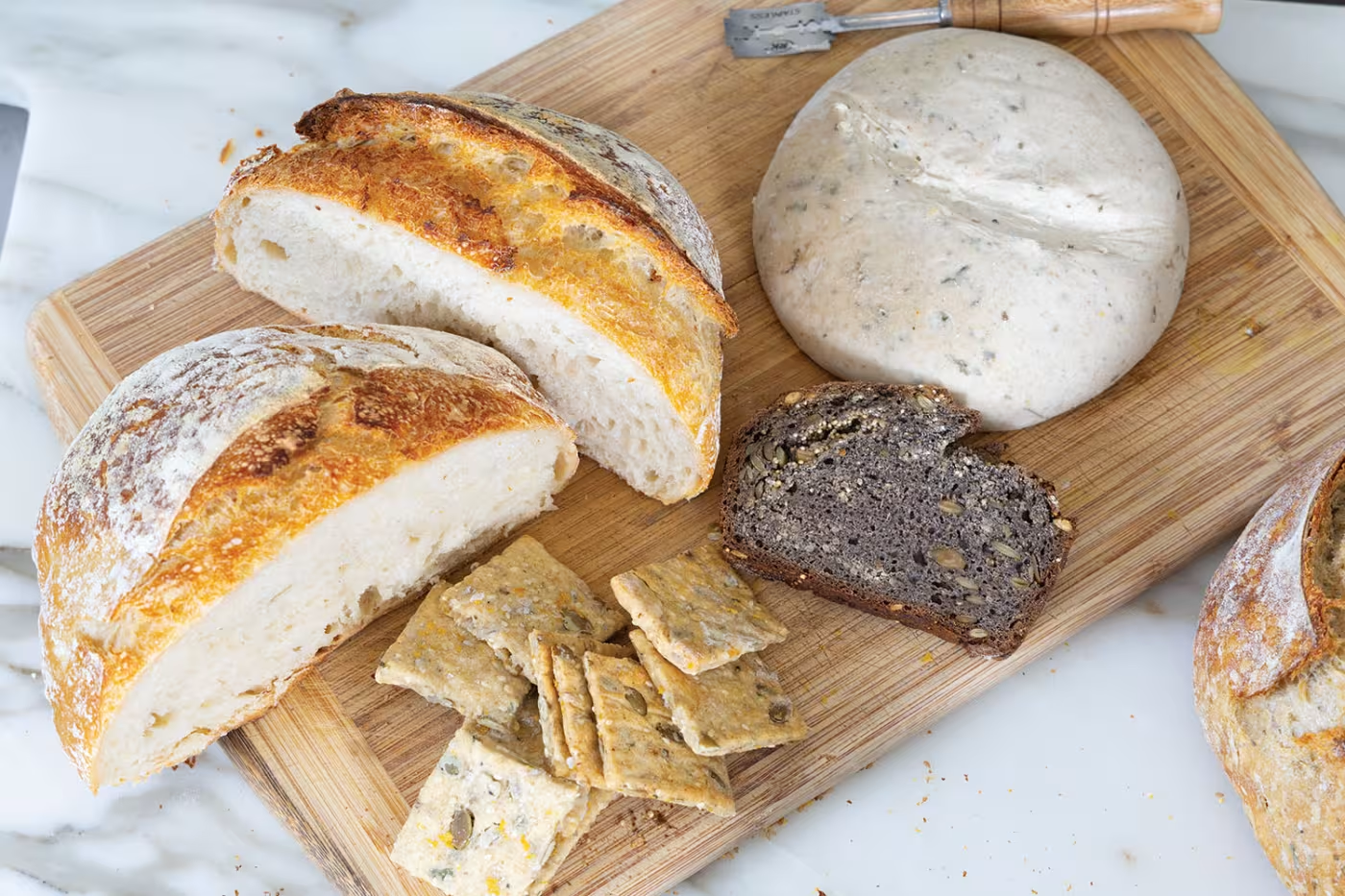
SOURDOUGH CRAZE Baking sourdough bread became a passion for many during the pandemic, when people had the time to put toward new, time-intensive hobbies. (Photo: lawellphoto.com)
While there are as many techniques to baking sourdough as there are bakers, the basics are the same: Let the flora found naturally in the air ferment flour and water, add more flour and water to create a dough, let the dough rise, fold it and stretch it, let it rest overnight, bake it in a covered Dutch oven, then bake it some more in the same Dutch oven, uncovered.
Sarah says she started following Maurizio Leo’s recipes via his website ThePerfectLoaf.com. “Of course, he’s the most complicated, and I don’t know why I have to do that to myself. But I did. He’s very precise, and I liked him so much I actually wound up getting his cookbook,” The Perfect Loaf: The Craft and Science of Sourdough, Breads, Sweets, and More.
Amy is more of a freewheeler. “She’s like, ‘Throw in a little flour and water and it will be fine,’” Sarah says. “I have to have the scale and measure and set the timer.”
As a weekly baker, Amy is a bit less stressed about the process. “I throw mine in the fridge and leave,” she says, noting that she had dough in the refrigerator as she played in a pickleball tournament that morning. “It’s got to live with you and live on your schedule.”
Still, Amy says, you can’t just forget about your starter for months on end. “It’s not quite like another child, but it takes patience and perseverance to remember to feed it and not leave it alone too long.” Amy says she’ll go for a couple of weeks at most not tending to her starter, and that’s only when she’s traveling. She calls it being “lazy.”
Sarah is a more sporadic baker, maybe because she is more beholden to her dough. “You can’t leave the house the day of the bread making,” she says. “You have to plan your day around it. And sometimes it’s a flop and you’ve spent two days making this bread and it’s only an inch tall. But when you get it right, it’s great.”
Amy’s favorite sourdough recipe is the one she has used for years. “It has like 20 steps,” she says. “But I just do it by memory now; I can tell by feeling the bread. I’m always looking at other recipes, always tweaking, adding that or trying that.” She says Alexandra’s Kitchen at AlexandraCooks.com and TheKitchn.com have good, basic recipes. And although she’s pretty confident, Amy says she had burns on her arms and hands for quite a while when she was a beginner sourdough baker (she fixed that with longer oven mitts), and also: “Making bread is so humbling.”
She explains, “You can’t get cocky or it throws you for a loop. I bragged yesterday that you just throw it in the fridge and make it work for you, and you know what? I didn’t get my normal rise. That’s what you get on the bread journey, and that’s why it’s so thrilling when you pull your top [of the Dutch oven] off halfway through and you see a beautiful loaf!”
“If I haven’t been baking in a while and I start and my breads aren’t rising like they used to, I’ll go back to simpler recipes,” Sarah says, sharing that she likes those from TheCleverCarrot.com and KingArthurBaking.com.
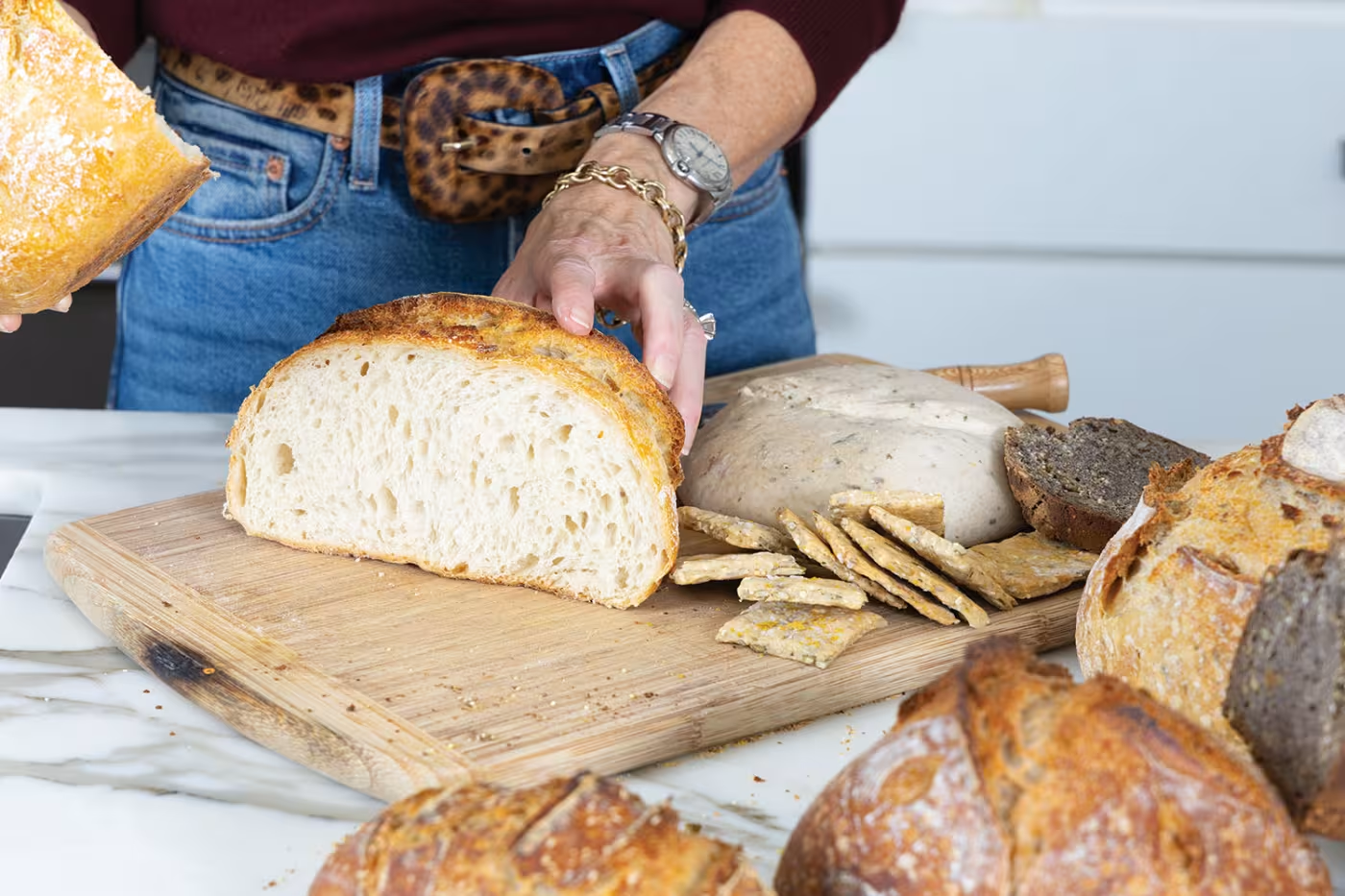
NOTHING BETTER Homemade sourdough bread not only tastes delicious, but it's more nutritious than store-bought bread. (Photo: lawellphoto.com)
While their commitment (and stress) levels are different, both Amy and Sarah confirm sourdough-baking is a process. “You feed [the starter] Friday, start the bread Saturday, and then it’s part of Sunday night’s dinner,” Amy says. “I can make a great loaf of bread, but it’s different often. It’s always a challenge.”
Sarah agrees. “Recently I did the whole thing, and I could tell it was going to be the best one I ever made.” But then she and Phillip went out to dinner, and she forgot to put the dough in the refrigerator overnight. “The whole thing turned into this runny mess,” she says. “I spent three days bringing the thing [starter] back to life, all day folding, stretching, and then to forget about it. Ugh. I haven’t baked another one since.”
When asked about the appeal of sourdough-baking, both Amy and Sarah relish the result. “Carbs, carbs, carbs,” Sarah says. “I love bread, I’ve always loved bread, I could eat bread alone and don’t even need butter.”
Amy adds, “I love having fresh, delicious bread. I use it for sandwiches, toast, fried eggs on toast for breakfast. Then I’ll put it in the fridge and four days later it’s croutons on our salad. After that, it becomes breadcrumbs, which you put in the freezer, and it’s a topping for pasta or a coating for chicken. I make that bread and use every bit of it.”
“It’s so much better than any bread you will buy anywhere,” Sarah says.
During the pandemic, Sarah would share her bread with neighbors at backyard get-togethers. “I was baking all the time back then, and I got good at it,” she says. “I think feeding it a lot and keeping that going is super helpful. Maybe I’ll be better after this conversation.” She says neighbors loved the bread served with good olive oil and cheeses. “It’s fun to share,” she says. “There’s nothing like a fresh, homemade loaf made from starter.”
“When the boys were home, they enjoyed it and would use it for sandwiches,” Amy says. Now, with just she and her husband Drew at home, Amy gives away one of the two loaves her recipe makes.
“Sadly, I don’t see Amy nearly as much as I used to,” Sarah says. “Our kids are older, she’s working. I miss seeing her, I miss that phase of life. We used to have a good time together just entertaining those wild boys. But we still talk and grab lunch every few weeks.”
And they are still sharing recipes, including the status of their sourdough. Amy is currently experimenting with buckwheat and seeds.
“You just keep on wanting to keep trying,” Amy says. “There’s so much joy in smelling that bread and pulling the top off the Dutch oven, and then you have this crusty, beautiful loaf. It makes me want to learn more.”
Amy’s and Sarah’s Sourdough Baking Tips: ‘Labor of Love’
Amy: “Cultivate joy. Because it may or may not come out, so you’ll be grateful for any outcome. It’s a journey.”
Sarah: “Amen.”
Amy: “Just last month I sliced open my thumb somewhere with the bread lame [the sharp blade that is used to score dough before it bakes]. Still don’t know how I managed to do that!”
Sarah: “Best not to get discouraged because every bite is worth it, even the less-than-photo-worthy breads. As they say, it’s a true labor of love.”
Amy: “I used to always have burns on my arms and hands. So I got longer oven mitts which helped somewhat.”
Sarah: “You definitely have to make bread on a day when you have nothing to do, which is almost never. I totally forgot I had a lunch and needed to do my stretch and folds still. Luckily, Phillip came in right as I was leaving so he got a quick course in stretching and folding every half hour for three-and-a-half hours. At least I could blame someone else if it was a flop.”
Amy: “Keep trying until you find a recipe that works for you. There are millions of them out there.”