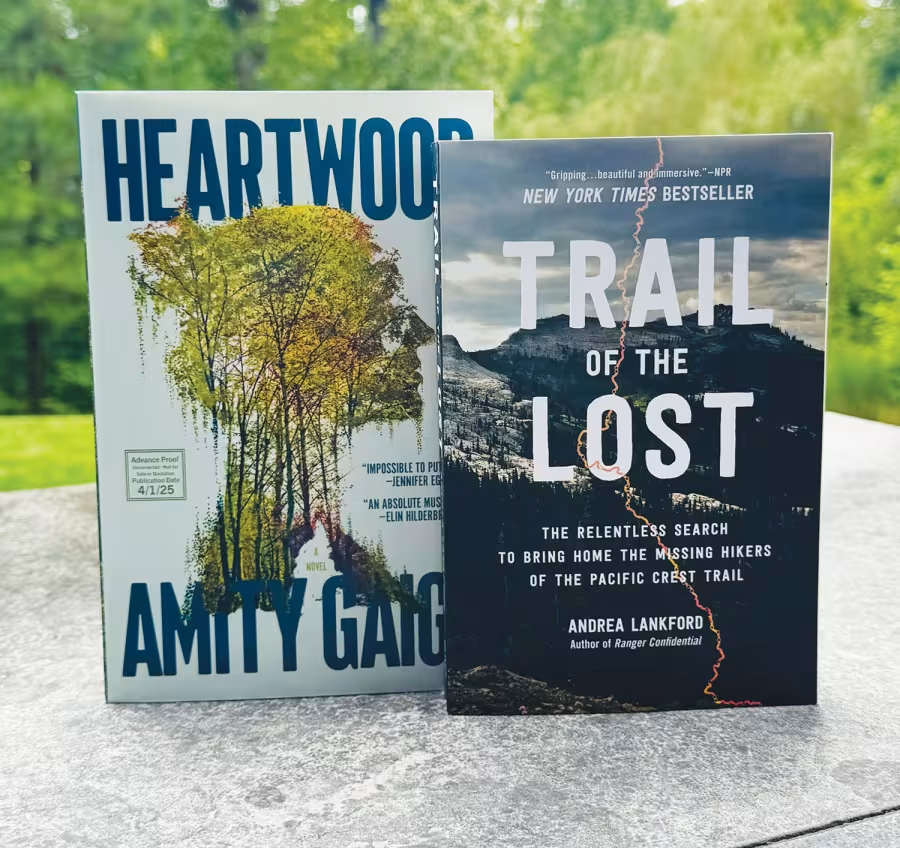
Pairing fiction and nonfiction books on the same or similar subjects can really enhance a reading experience. Often when I read a fictional story set in a place or featuring a topic with which I am not very familiar, I want to learn more and end up doing a deep dive into that subject matter through nonfiction. I enjoy finding nonfiction books that pair well with a novel I enjoyed, and I recommend starting with the fiction. Here are some of my favorite pairings:
The Impossible Thing by Belinda Bauer (fiction) and The Falcon Thief: A True Tale of Adventure, Treachery, and the Hunt for the Perfect Bird by Joshua Hammer (nonfiction) – The Impossible Thing is a fascinating mixture of crime fiction, historical adventure, and intrigue set in the world of egg trafficking, demonstrating the extraordinary lengths people will go to add rare eggs to their collections. Bauer examines the power of human obsession to obtain and possess, and this theme permeates the book. The Falcon Thief is a true-crime adventure about Jeffrey Lendrum who travels the globe stealing rare eggs to add to his collection and to sell to wealthy individuals who race falcons in the Middle East, and the wildlife detective determined to stop him. Pairing the two books together provides a deep dive into this odd world, giving the reader a full understanding of the people who feel a compulsion to collect rare eggs and the results of such an obsession.
Wild Dark Shore by Charlotte McConaghy (fiction) and Seeds on Ice: Svalbard and the Global Seed Vault by Cary Fowler (nonfiction) – Atmospheric and mysterious, Wild Dark Shore centers around the Salts, a family protecting a seed vault on a remote island that is slowly succumbing to rising sea levels. The Salts are the island’s only remaining human inhabitants until a mysterious woman washes up on shore during a terrible storm. After reading this one, I found myself completely fascinated by the concept of a seed vault and what one would actually look like. Seeds on Ice: Svalbard and the Global Seed Vault is a beautiful coffee table book that details the incredible efforts to save agriculture by gathering more than half a billion seeds containing earth’s most coveted crops. Svalbard is located in Norway and is the seed vault that McConaghy bases her vault on in Wild Dark Shore (though she moves the location of it). Seeds on Ice fabulously complements Wild Dark Shore with stunning photos of the seeds and the vault that contains them and substantiates the urgency of the Salt family’s desire to protect such an important place.
True Biz by Sara Novic (fiction) and The Boys of Riverside: A Deaf Football Team and a Quest for Glory by Thomas Fuller (nonfiction) – True Biz details the challenges that deaf individuals and their family members face, what it means to be deaf, and how family members address the issue. Set at a school for the deaf, True Biz follows several students who yearn to be accepted for who they are and the uniqueness that their deafness brings to them. This book is an absorbing and unforgettable journey into the deaf community, and Sara Novic beautifully explores the ways language can include, exclude, or help forge an identity. When I listened to The Boys of Riverside, I realized that the books complement each other well. Fuller chronicles the amazing story of an all-deaf high school football team’s successful journey from a losing record to undefeated, the team’s close bond, a fascinating portrait of what it means to be deaf in America, and the head coach who believed in his team. I was cheering the boys on from page one. Both books address isolation, American Sign Language, cochlear implants, the power of language, the impact of technology on those who cannot hear, and the history of the deaf community, making them a fabulous pairing.
The Correspondent by Virginia Evans (fiction) and Syme’s Letter Writer: A Guide to Modern Correspondence About (Almost) Every Imaginable Subject of Daily Life, with Odes to Desktop Ephemera and Selected Letters of Famous Writers by Rachel Syme (nonfiction) – Most mornings, 73-year-old Sybil Van Antwerp sits down to write letters – to her brother, to her best friend Rosalie, to Joan Didion and Ann Patchett to give them her thoughts on their latest books, and to one mysterious person to whom she writes regularly but never sends her missives. When letters from her past force her to do some self-reflection, Sybil realizes that she must reconsider some long-held beliefs. Sybil’s wry wit and clever sense of humor are present throughout, and the letters she writes and receives are a joy to read. Syme’s Letter Writer is an absolutely delightful literary jaunt through the lost art of letter writing, exploring the cultural history and undeniable thrill of old-school correspondence as well as encouraging the reader to start writing letters. Syme provides guidance on how to begin a correspondence and the many ways a letter writer can enhance the process including collecting fancy pens, embossers, and beautiful stationery and envelopes. Both focus on the power of the written word, demonstrate why letter writing is important, and address how letters build community and relationships, and they make a great pairing.
Heartwood by Amity Gaige (fiction) and Trail of the Lost: The Relentless Search to Bring Home the Missing Hikers of the Pacific Crest Trail by Andrea Lankford (nonfiction) – Trail of the Lost is a true crime adventure that chronicles a former law enforcement park ranger’s quest to find missing hikers along the Pacific Crest Trail (PCT) by pairing up with an eclectic group of unlikely allies. This book touches on so many topics related to the PCT – hiker culture, how social media and influencers have increased traffic on this trail and other prominent ones and how that leads to more unprepared people setting out on the trails, the natural world and our place in it, and more. She also explains how a trail as popular as the PCT isn’t always properly marked and why people manage to step off the trail fairly regularly. Heartwood follows a search and rescue team racing against time when an experienced hiker disappears on the Appalachian Trail in Maine. The story is told through the perspectives of the rescue team, an armchair detective, interviews with other hikers, and letters the missing hiker wrote to her mother while on the trail. While the book is character driven, it is incredibly compelling, and the mystery inspires larger questions about the many ways in which we get lost and how we can be found. Both books document the vast and rugged wilderness found on these two iconic trails and how easy it can be to get lost or wander off trail. They also highlight the unique and quirky people who inhabit this world, both on the trails and off, and how difficult it can be to locate lost people in the wild. They are a natural pairing that complement each other well.
Another book that would pair well with Trail of the Lost is Have You Seen Her by Catherine McKenzie (fiction), a thriller about a woman who goes missing in Yosemite National Park. How people are searched for, what it means to go missing in a national park or public trail, and the potential for someone to never be found are explored in both of these books as well as a deep dive into the culture that develops in these spaces.

LIFE AND DEATH Cemeteries exist for the both the living and the dead, and these two beautiful books – Fresh Water for Flowers by Valérie Perrin (fiction) and The Secret Life of a Cemetery by Benoit Gallot (nonfiction) examine day-to-day life in two French cemeteries. (Photo: Cindy Burnett)
Fresh Water for Flowers by Valérie Perrin (fiction) and The Secret Life of a Cemetery: The Wild Nature and Enchanting Lore of Père-Lachaise by Benoit Gallot (nonfiction) – Translated from the French, Fresh Water for Flowers is a beautiful meditation on life, motherhood, tragedy, community, death, and grief. Violette Touissaint, recently abandoned by her husband, accepts the job as a cemetery keeper at Brancion-en-Chalon, a small town in Bourgogne, France. Her daily routine consists of maintaining the cemetery and engaging with a small circle of colleagues and friends. This character-driven tale brings to life Violette and those she encounters, demonstrating the power of human connection as well as life as a cemetery caretaker. Gallot is the curator of the most famous cemetery in the world, Père-Lachaise Cemetery in Paris. In his entertaining The Secret Life of a Cemetery, Gallot takes the reader behind the scenes and captures not only what it means to operate such an iconic place, but also the important role of serving people in times of loss and grief. His portrait of Père-Lachaise as a complex, living organism is fascinating, and the book paints a picture of an historic place operating in a modern world. These two books make a natural pairing with their unique and shared cemetery settings as well as how each addresses grief, how cemeteries function today, and what those spaces mean for a community.
The Last Ranger by Peter Heller (fiction) and American Wolf: A True Story of Survival and Obsession in the West by Nate Blakeslee (nonfiction) – Peter Heller crafts an engaging mystery in The Last Ranger, a story set in Yellowstone National Park where a dustup between a local hunter and a wolf biologist turns violent, and a park ranger is tasked with finding out what really happened. In American Wolf, Blakeslee gives a panoramic overview of the wolf reintroduction project and the recurring clashes between hunters and biologists about whether wolves should be a protected species. American Wolf focuses on the wolves themselves and the public land issue – what it is and who has the right to decide how it is used as well as human responsibility in relation to the land. All three of these topics play large roles in The Last Ranger too, which make these two books great companion reads as well as the fact that they are both set in Yellowstone. Both authors manage to vividly bring the natural world to life – the land and the animals – the reader feels transported to Yellowstone in all of its glory.
Two other books that were inspired by American Wolf are Charlotte McConaghy’s Once There Were Wolves and CJ Box’s Wolf Pack, book 19 in his Joe Pickett series. While the series builds on itself book by book, Wolf Pack can be read as a standalone if a reader is interested in wolves and their role in Yellowstone and Wyoming at large.
Banyan Moon by Thao Thai (fiction) and House of Sticks: A Memoir by Ly Tran (nonfiction) – Banyan Moon follows three generations of Vietnamese women and how their relationships developed and impacted each other over the years. This is a stunning tale of the bonds between mothers and daughters and how those bonds inform people's lives. In House of Sticks, Ly tells the story of how her family moved to the United States as part of a relocation program from Vietnam when she was three. They are resettled in an apartment in Queens, speak no English, and are required to find work. Moreover, they are required to pay back the cost of their flights to the U.S. Ly tells her family’s story with grace, and she provides great insight into what the immigrant experience is like for one family as well as how difficult it was for her to straddle two cultures. These two books pair well because both stories focus on the lasting impact of family trauma and history. House of Sticks provides in-depth detail about the financial and personal costs and difficulties associated with immigrating and also about Vietnamese culture and customs that will make reading Banyan Moon an even more rewarding experience.
Editor’s note: Book reviewer Cindy Burnett also writes our monthly Buzz Reads column and weekly Page Turners column. She hosts an award-winning book podcast entitled Thoughts from a Page Podcast www.thoughtsfromapage.com, runs the Instagram account @thoughtsfrompage, and regularly speaks to groups about books.